Providing a global platform for researchers, policy makers and industry professionals to share relevant knowledge and examples from practice associated with new forms of rural development, targeting the 40% rural population in the globe and contributing towards a climate-positive planet
Introduction
With over 40% of the world’s population residing in rural areas, there is growing global interest in research on “Smart Villages” as a means to address the unsustainable trajectory of the widening urban–rural divide and to reframe it into a more balanced and sustainable "Urban–Rural Shared" development model. The Smart Villages research undertaken within the Faculty of Architecture, Building and Planning at the University of Melbourne examines rural community development through an integrated lens of policy, practice, and innovation. It places particular emphasis on community-centric planning of affordable housing and infrastructure, sustainable growth, and community empowerment, alongside broader socio-economic and environmental dimensions essential to the realisation of Smart Villages.
About the conference
This conference will be fully peer-reviewed, supported by a scientific committee comprising globally recognised leaders and experts. All submitted papers will undergo a rigorous double-blind review process prior to acceptance. Building on the successful precedent of COSVARD 2025—where the proceedings were accepted for publication in the Lecture Notes series by Springer Nature—the COSVARD 2026 proceedings are expected to be indexed in Scopus. Accepted papers, subject to copyright compliance, will be published in the Lecture Notes series with a leading international publisher. While full papers will be compiled into an edited book volume, a downloadable abstract booklet will be made publicly accessible via the ‘Publications’ section of the Smart Villages Lab website, ensuring broad dissemination and enhanced research impact.
Details
Conference dates
29 -31 October 2026 (Hybrid mode)
Time: 9:00 am (Indian Standard Time), 2:30 pm (Australian Daylight Eastern Standard Time)
Schedule
The Conference Schedule will be available HERE.
Smart Villages (SV) Design Poster Competition
SV Design Poster Competition will run as part of the conference. For poster details, refer to Smart Villages Design Poster
Conference Organiser
Smart Villages Lab (SVL)
The University of Melbourne
Local Partner
Gandhigram Rural Institute (GRI) Deemed University, Dindigul, Tamil Nadu, India
Affiliated Partner(s)
Indian Institute of Technology (IIT) Madras, Chennai, India
National Institute of Technology (NIT) Trichy, India
International Council for Research and Innovation in Building and Construction (CIB)
Key Dates
All papers must be submitted through COMS
- Sign-up, submit a brief abstract with a clear title of the paper/ or design poster:
30 May 202630 June 2026 (extended) - Full paper/design poster submission: 30 June 2026
- Full paper/design poster acceptance: 30 August 2026
- Camera-ready paper/design poster: 30 September 2026
- Registration on or before: 10 September 2026
- Conference date: 29-31 October 2026
Keynote speakers
1. Prof Mohan Kumaraswamy
Topic: TBC
2. Prof Dongping Fan
Topic: TBC
3. Prof Goerge Ofori
Topic: TBC
4. Prof Martin Loosemore
Topic: TBC
Paper/Poster Registration fee (for Authors/presenters) #
- Early Bird Discount (until 31th August 2026): AUD250
- Full Price (from 1st September 2026): AUD350
- Student Price: AUD200 (student cards will be checked upon arrival and this will be strictly enforced)
Register now
Hospitality/Processing fee (for in-person attendees at the conference venue) *
#, * Please note that all in-person attendees at the conference venue must register with the host institution, GRI and pay a nominal hospitality/processing fee directly. A separate in-person registration link will be available shortly.
Location
HYBRID MODE (BOTH ONLINE AND FACE-TO-FACE)
Face-to-face venue: Gandhigram Rural Institute (GRI) Deemed University, Dindigul, Tamil Nadu - 624302, India
Hosted by: Centre for Rural Technology
Webinar Link: TBC
Register in advance for this meeting:
(The link is coming soon)
Contacts
- A/Prof Hemanta Doloi (Chair), The University of Melbourne
- Dr B. Sangeethavani (Co-Chair), GRI Deemed University
- Dr R. T. Balamurli (Co-Chair), GRI Deemed University
- Dr Santhosh Loganathan (Co-Chair), NIT Trichy
- A/Prof Ani Raiden (Co-Chair), Nottingham Trent University, UK
- Dr Suhair Z Alkilani (Co-Chair), UTS, Sydney, Australia
- Prof Martin Loosemore (Co-Chair), UTS, Sydney, Australia
Scientific committee
- Professor Craig Langston, Bond University, Australia
- Professor Mark Burry, Swinburne University of Technology, Australia
- Professor Anthony Mills, Deakin University, Australia
- Professor Bishwajit Bhattacharjee, Indian Institute of Technology, Delhi, India
- Dr Yoshiki Higuchi, Nippon Institute of Technology, Japan
- Dr Siddhartha Singha, Indian Institute of Technology, Guwahati, India
- Professor Shaila Bantanur, BMS School of Architecture, Bangalore, India
- A/Professor Masa Noguchi, The University of Melbourne, Australia
- Assistant Professor Sajal Chowdhury, Chittagong University of Engineering and Technology, Bangladesh
- Dr James Helal, University of Melbourne, Australia
- Professor Anu Gokhale, Illinois State University, U.S.
- Professor Reeta Sarmah, Jorhat Engineering College, India
- Professor Benny Raphael, Indian Institute of Technology, Madras, India
- Dr Dominique Hes, University of Melbourne, Australia
- A/Prof Peter Raisbeck, University of Melbourne, Australia
- Professor Koshy Varghese, Indian Institute of Technology, Madras, India
- A/ Professor Arup Bhattachajee, Jorhat Engineering College, Assam, India
- Dr Mehdi Amirkhani, University of Melbourne, Australia
- A/Professor Manjuri Hazarika, Assam Engineering College, India
- Geoff Kimm, Swinburne University of Technology, Australia
- Dr Citra Ongkowijoyo, Deakin University, Australia
- Professor Boeing Singh, Indian Institute of Technology Guwahati, India
- A/ Professor Nithyadharan Mokkaiyan, Indian Institute of Technology Tirupati, India
- Dr Salman Shoostarian, RMIT University, Australia
- A/ Professor Essam Almahmoud, Qassim University, Saudi Arabia
- Dr Mohammad Arif Rohman, Sepulah Nopember Institute of Technology, Indonesia
- A/Prof Sean Jin, Western Sydney University, Australia
- Dr Sasanka Borah, Assam Engineering College, India
- A/Professor Pradip Baishya, Assam Engineering College, India
- Professor Bipul Talukdar, Assam Engineering College, India
- Dr Medalson Ronghang, Bineswar Brahma Engineering College, India
- Dr Kiran Shinde, La Trobe University, Australia
- Dr Hannah Robertson, The University of Melbourne
- Dr Alessandro Liuti, The University of Melbourne
- Dr Sally Donovan, Research Fellow, The University of Melbourne
- Dr Arif Rohman, Institut Teknologi Sepuluh Nopember (ITS), Indonesia
- Dr B. Mahesh, NICMAR, Hyderabad, India
- Ms Dwijomala Hanjabam, Mizoram University, India
- Mr Abdullatif Abdallah (Smart Villages Lab), The University of Melbourne
- Dr Luisa Lombardo, UniPa, Italy
- Dr Sujatha E Ramani, SASTRA University, Thanjavur, India
- Prof Neelakantan T R, SASTRA University, Thanjavur, India
- Dr Santhosh Loganathan, NIT Trichy, India
- Dr B. Sangeethavani, GRI Deemed University
- Dr R. T. Balamurli, GRI Deemed University
- A/Prof Ani Raiden, Nottingham Trent University, UK
- Prof Martin Loosemore, UTS, Australia
- Dr Suhair Z Alkilani, UTS, Sydney, Australia
Themes
Conference themes include, but are not limited to:
- Rural Housing
Housing affordability, low-cost housing, materials selection, energy and water solutions, sanitation, reusability and recycling of waste, skill development, environmental design, disaster resilience and other relevant topics. - Rural Infrastructure
Construction and maintenance of roads and other forms of infrastructure, access to education and health care, provision of services, including energy, potable water, waste and sewage management, creation of public spaces, ICT applications and operations, and other related topics. - Rural Economy
Building social capital, micro and community-led finance, income generation, farming support, crop selection and improvement, market access, pricing, various forms of tourism and other related topics. - Sustainability
Environmental, Social, and Economic sustainability, implementation of Sustainable Development Goals (SDG). - Smart Governance
ICT and data-driven solutions, machine learning applications, alternative forms of governance and other relevant topics. - Circular Economy
Framework for local manufacturing, local production, local consumption, use and re-use, repairing, refurbishing, re-cycling products and services, including other relevant topics. - Social Procurement, Social Value and Value-for-Money
Models for promoting localised trades and contracts, evaluation of community-specific social benefits, value for money assessments, alternative forms of procurement strategies and other relevant topics. - Rural Enterprises and Rural Entrepreneurship
Models for supporting people to build their entrepreneurial capability and capacity to leverage new opportunities and empower rural communities at large. - Rural Culture and Experience
Appreciation, preservation, characterisation, comparison or contrast of the rural culture and experience with a solid connection to land, agriculture, and nature which encompasses the way of living, values, habits, and traditions of people living in remote or rural areas. - Climate Change, Global Warming and Role of Rural Development (targeting the 40%)
Solutions for alternative, value-based, context-specific development models targeting the 40% global population who still live in rural areas but with relatively low-carbon footprints. The climate action undertaken among the 60% urban population will make sense only when the greenhouse gas emission is contained among the remaining 40% rural population. In the Smart Villages program, we strongly oppose the current practice towards closing the gap of “Urban-Rural Divide” but rather promote the harmonised “Urban-Rural Share” with a clearly defined and purpose-based lifestyle among both communities. Should we fail to contain the current 40% of rural communities in a climate-positive natural environment and allow the currently prevailing unsustainable practices in their modernisation spree, the damage to the planet will be completely irreversible. - Smart and Sustainable Infrastructure for Rural Areas
Includes research on Modern Housing Solutions for Rural Communities, Developing Efficient Transportation Networks in Villages, Water Supply and Sanitation: Urban Standards in Rural Settings, and Building Climate-Resilient Rural Infrastructure. - Digital Connectivity and Technology Access
Include research on the Role of Technology in Delivering Urban-Like Services to Villages, E-Governance and Digital Public Services for Rural Communities, Cost-effective digital solutions for water supply, sewage and solid waste management.
Dindigul- the location for COSVARD 2026
Dindigul is a historic city in Tamil Nadu, India, serving as the administrative headquarters of Dindigul district in the state’s southwest region. With a rich past shaped by multiple dynasties and empires, it features notable landmarks such as the Dindigul Fort. Located near major cities like Madurai and Tiruchirappalli, it is well connected by road and rail. The city is known for its lock-making industry and distinctive biriyani. Its economy includes agriculture, textiles, leather, and services, with agriculture remaining central. Surrounded by hills and fertile land, Dindigul is part of the AMRUT Smart Cities initiative, supporting its ongoing urban development (ref. Wikipedia)
Location (Past)
COSVARD was born from the collaborative Smart Villages research program between the State of Assam, India and the University of Melbourne. In the past, COSVARD was held in the city of Guwahati, in the North-Eastern Indian state of Assam. Guwahati is the capital of Assam and contains the famous “Kamakhya Temple”, as well as the world’s smallest habitable island “Umananda” and many sites of archaeological significance.
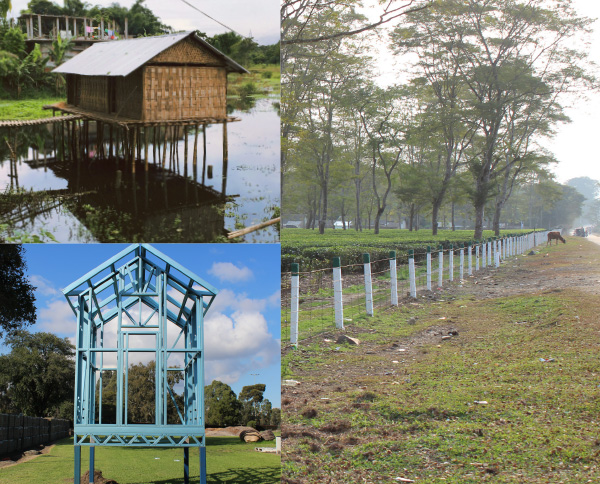
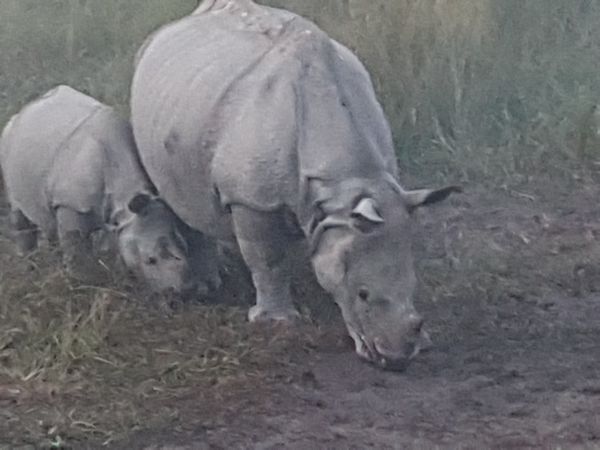
Assam is located in the Himalayan Valley, and has an abundance of pristine natural beauty. It is also the gateway to the seven sister states of North-East India and neighbouring countries. It is home to an incredible variety of wildlife, including the single-horned rhinoceros, as well as a very high concentration of Bengal Tigers.
It is also where Majuli Island, the world’s largest river island, is located within the mighty Brahmaputra River. Assam is famous for its tea plantations and silk. Assam’s emerging economy, and rapid modernisation are attracting not only people from other parts of India but also visitors from around the world. For more information on things to do in Assam click here or here.
Accommodation
For accommodation in Dindigul for accessing COSVARD 2026 at GRI Deemed University campus, kindly contact the local hosts. The contact persons are Dr B. Sangeethavani (Co-Chair), GRI Deemed University and Dr R. T. Balamurli (Co-Chair), GRI Deemed University.